
Telegram Guide
Telegram not sending code? Fix missing codes, retry lockouts, QR login issues, and banned phone numbers with this practical guide.

Damian Ledesma
April 13, 2026
•
8 minutes

A direct look at where Slack still wins, where Telegram works better, and how SUCH helps teams run Telegram as a practical support workflow.
Slack is still one of the most widely used tools for team communication, and that makes sense. It gives companies a dedicated internal workspace, organized channels, a strong integration ecosystem, and a structure that fits many office-based workflows.
But that same structure can also be the downside.
For many small businesses, creator teams, support operations, and community-led companies, Slack is often more workplace than they actually need. It can add another workspace, another login, and another place to check, especially when the most important conversations are already happening somewhere else.
Telegram can be the better fit when your real work is support, feedback, or community operations that already happen on Telegram, and you want the team workflow to live there too.

Slack became widespread because it solves a real problem well. It gives teams a dedicated place for internal communication, keeps discussions separated by channel, and makes it easier to coordinate work across departments.
It also is not purely "internal chat" anymore. With Slack Connect, Slack can include external partners, vendors, and customers in shared channels, and it has grown into a wider work surface around conversations.
In many companies, Slack is where the work lives: conversations, docs, lightweight task tracking, calls, and automations all happen in the same place.
For larger companies, that structure is useful. When dozens of people need a shared internal system with predictable rules, Slack still makes sense, even with per-seat pricing.
The problem is simple: not every business works like a large internal organization, and not every team wants a per-seat tool in the middle of customer or community conversations.
Slack can include people outside the company. The practical catch is adoption: it works best when the other side is also willing and able to operate inside Slack, and that is not always true for customers or communities.
That is where Slack starts to feel inefficient.
Even though Slack reduces tool switching inside a workspace, it can still create a split between where real conversations happen and where the team manages them. The result can be more copying, more follow-ups, and more coordination around moving context between tools instead of acting on the conversation itself.
Cost can reinforce this split. Slack has a free plan, but teams that rely on it day to day often end up on a paid, per-seat plan. Telegram is free for the audience, which matters when the people you serve are not employees and you do not want to pay "seats" for them.
This is especially common in businesses that are:
In those cases, Slack may still be useful, but it is often not the most practical center of operations.

Telegram is often reduced to “just a messaging app,” but that misses how many businesses already use it in practice.
It is fast, familiar, and easy to use across devices. Many customers and members already have it open, and it is free for them to use. Teams can react quickly without pulling people into a separate support portal or asking them to join another workspace. For founders, moderators, and lean support teams, that matters.
For creator businesses, Telegram can also sit closer to the business model itself, including cases where teams monetize communities without leaving the platform.
Telegram also has more business structure than many people assume. Features like business accounts, quick replies, automated messages, topics, channels, groups, bots, and mini apps make it much more flexible than a basic chat app.
That is why Telegram can be a better fit for very common business cases such as:
In these cases, Telegram is not just a contact point. It can be the working environment itself.
The strongest case for Telegram over Slack is not that Telegram needs to become a clone of Slack. It is that Telegram can stay Telegram while gaining the structure a team actually needs.
That is where SUCH fits.
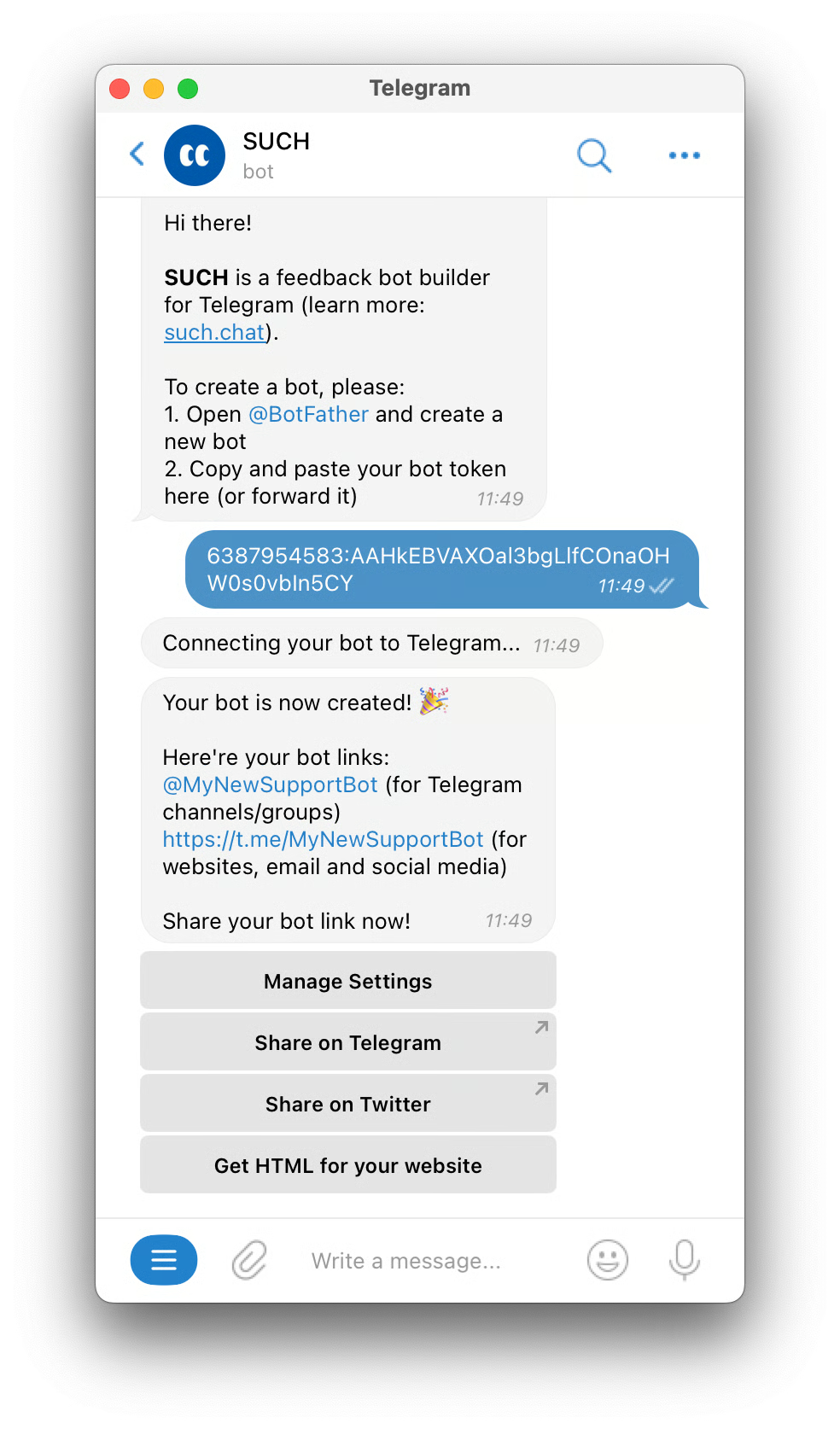
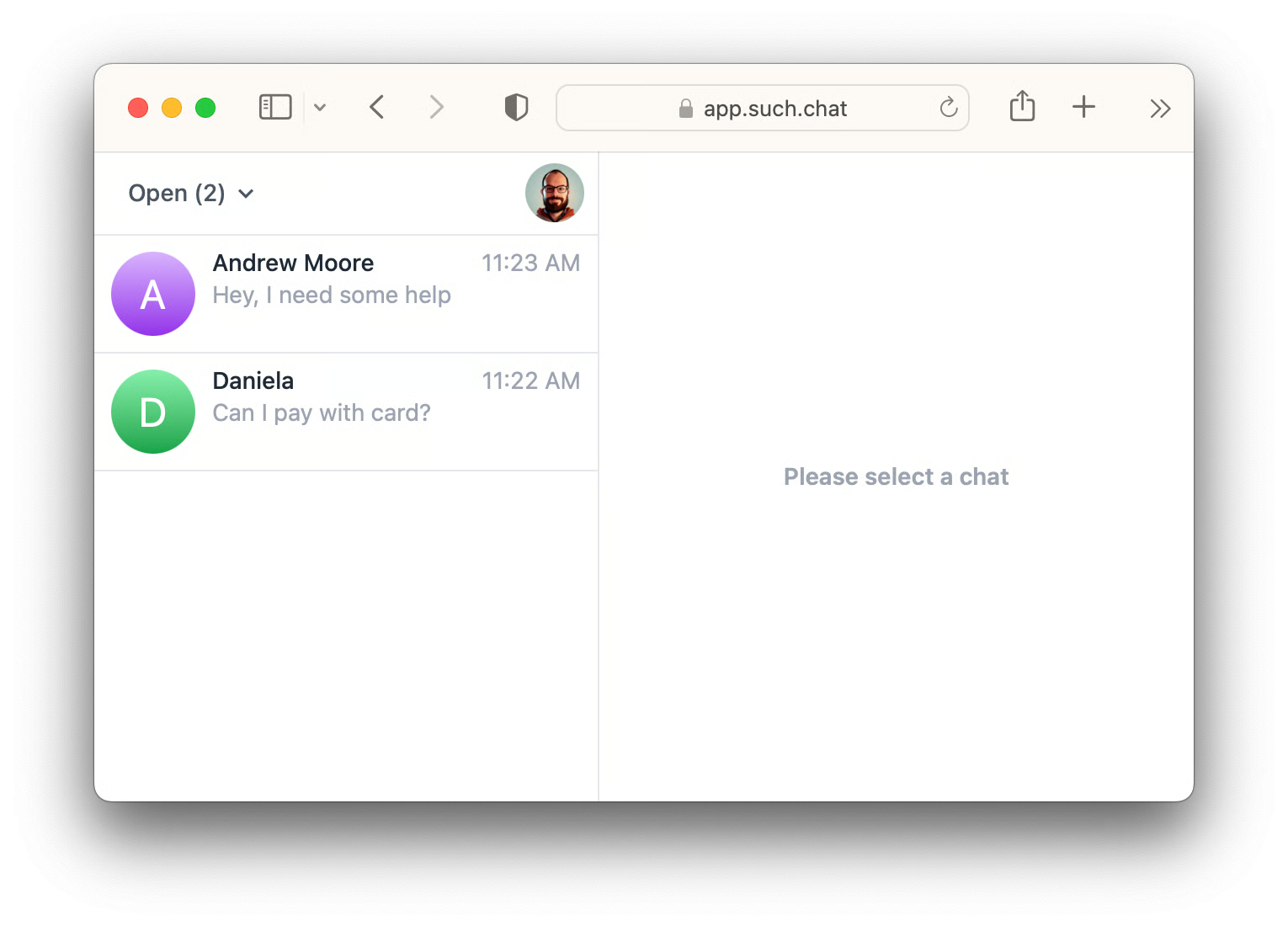
SUCH is a Telegram-first bot builder. Teams use SUCH to create their own support or feedback bot for Telegram. In practice, end users message that team-owned bot in Telegram, not SUCH itself. The team can then reply from Telegram or from the SUCH web app, depending on what is more convenient. Building and running bots, plus using the SUCH web app, is free. Premium features and AI credits are optional.
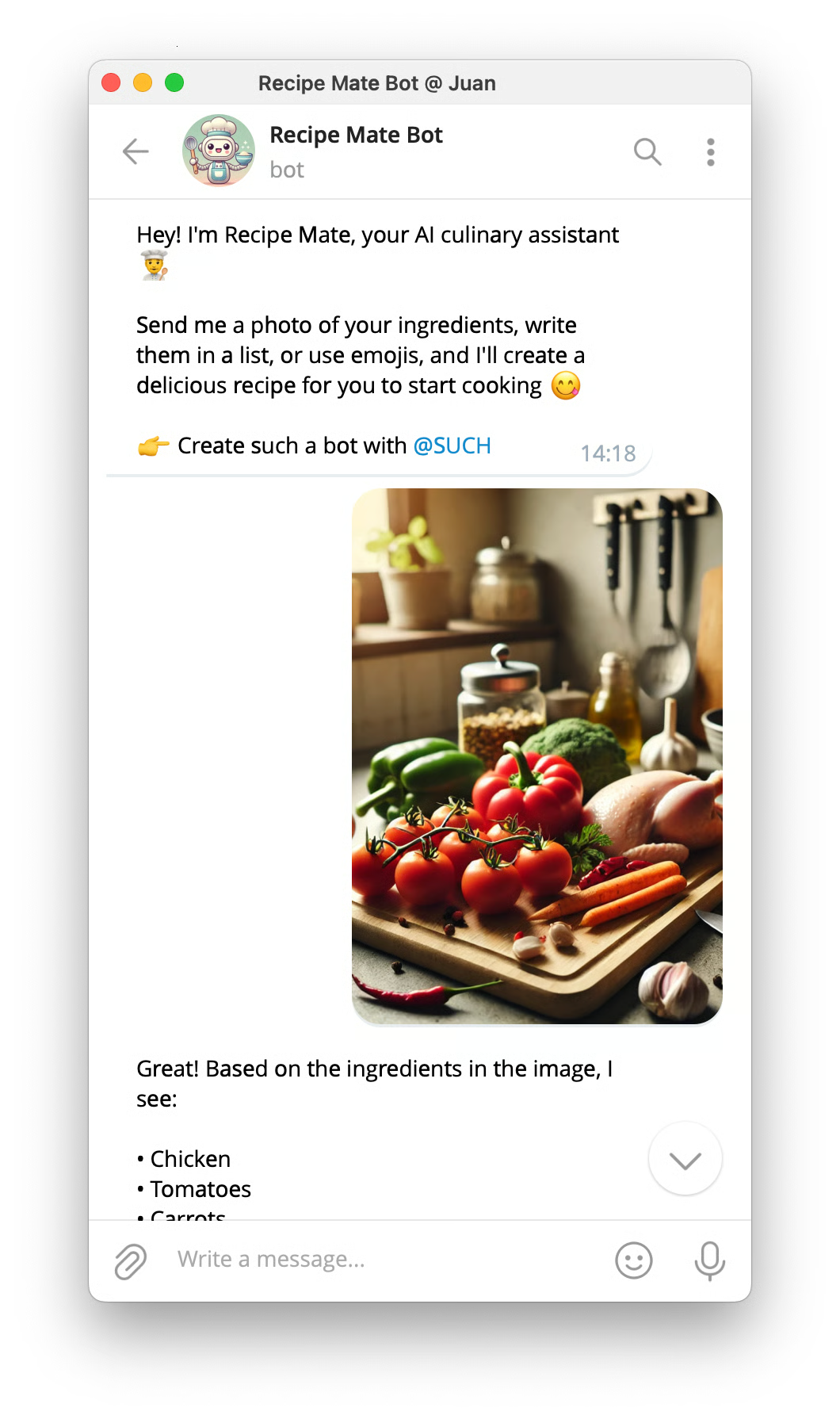
That setup is useful for teams that want to stay close to the user while giving the team more clarity and control behind the scenes.
With SUCH, teams can:
This framing matters.
Telegram is already strong for messaging, groups, and real-time contact. SUCH adds the missing workflow layer for teams who need to manage conversations, not just receive them.
And unlike seat-based tools, the core setup stays lightweight: start for free, then pay only for optional premium features or AI credits.
Telegram can be the better choice when a business already lives close to its audience and values speed more than workplace formality.
That is common for:
For these teams, Telegram removes friction instead of adding it. The team stays closer to the conversation, works in a tool people already use, and avoids creating an unnecessary gap between communication and action.
Slack remains useful, especially for larger companies that need a formal internal workspace.
But many widespread business cases do not need that level of separation between internal communication and user communication. They need speed, mobility, and a workflow that stays close to where conversations already happen, without forcing an audience into a paid seat or a new workspace.
That is why Telegram can be the better alternative for some teams. And when a Telegram-first workflow is organized with SUCH, it becomes even more practical for support, feedback, and community operations.
The real question is not which tool looks more powerful on a feature list. It is which tool matches the way the business already works.
For many Telegram-first teams today, that answer is Telegram.

Telegram not sending code? Fix missing codes, retry lockouts, QR login issues, and banned phone numbers with this practical guide.
Learn how to use Telegram! Stup, chats, channels, bots, and Premium. Start chatting now!